
Comment l'Arche Lumineuse a été construite

Deux milliards de tonnes, assemblées en orbite en deux siècles et demi.

The novel says only that the Ark was born in the orbital shipyards, where people lived for two and a half centuries before setting out. What follows is the film's reconstruction: invented, but made with the model's numbers and with the physics we know.

Too heavy to leave the ground

Yes, it was assembled in orbit: it could not have been otherwise. Under the vaults there are some 150 km² of glass with two metres of water between the panes, nearly 300 million tonnes; on the 180 km² of floor, half a billion tonnes of soil; the rings' structure weighs as much again. Almost two billion tonnes in all. With 150-tonne launchers it would take more than ten million launches: one an hour for over a thousand years.
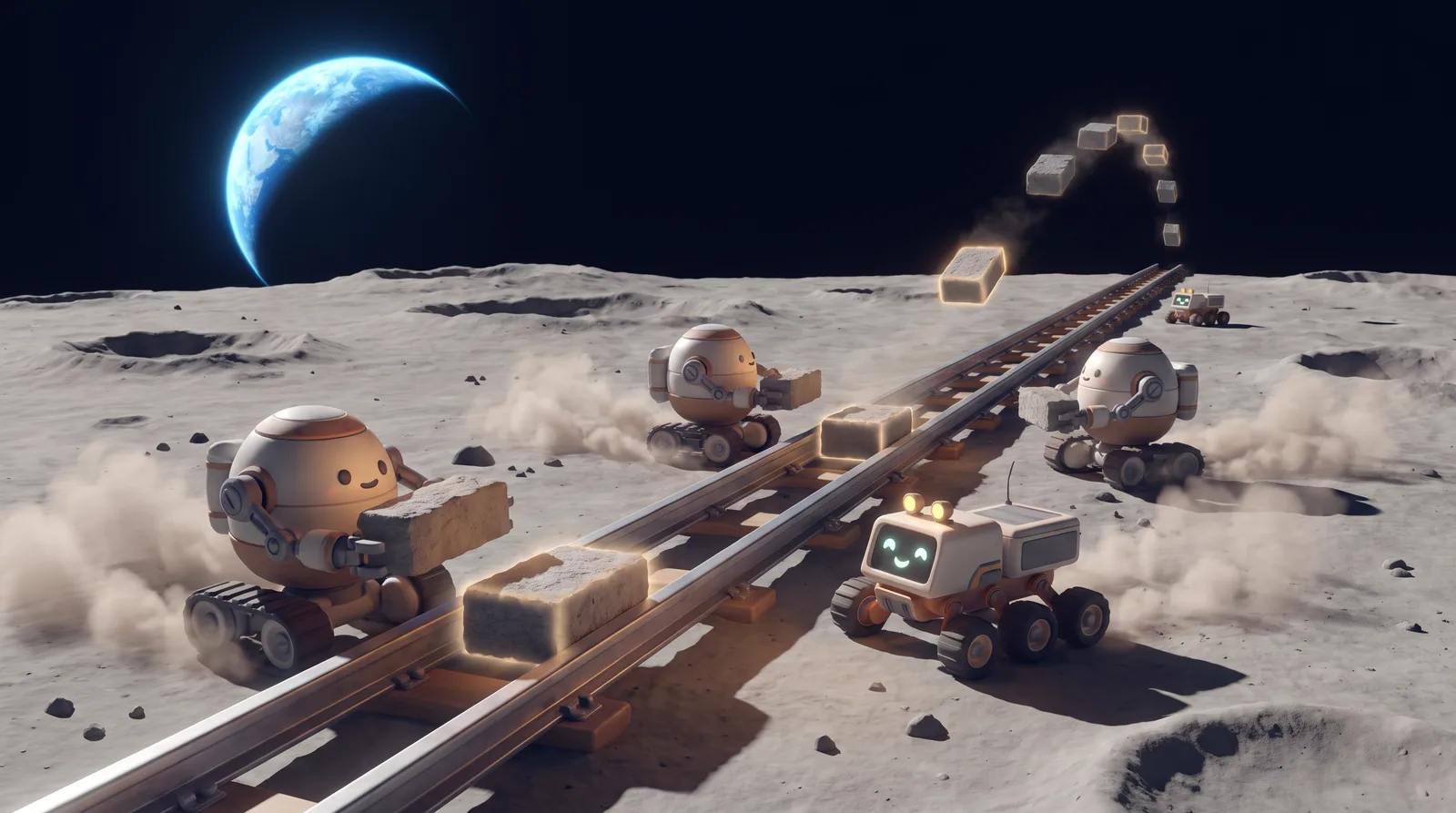
The yard at L5

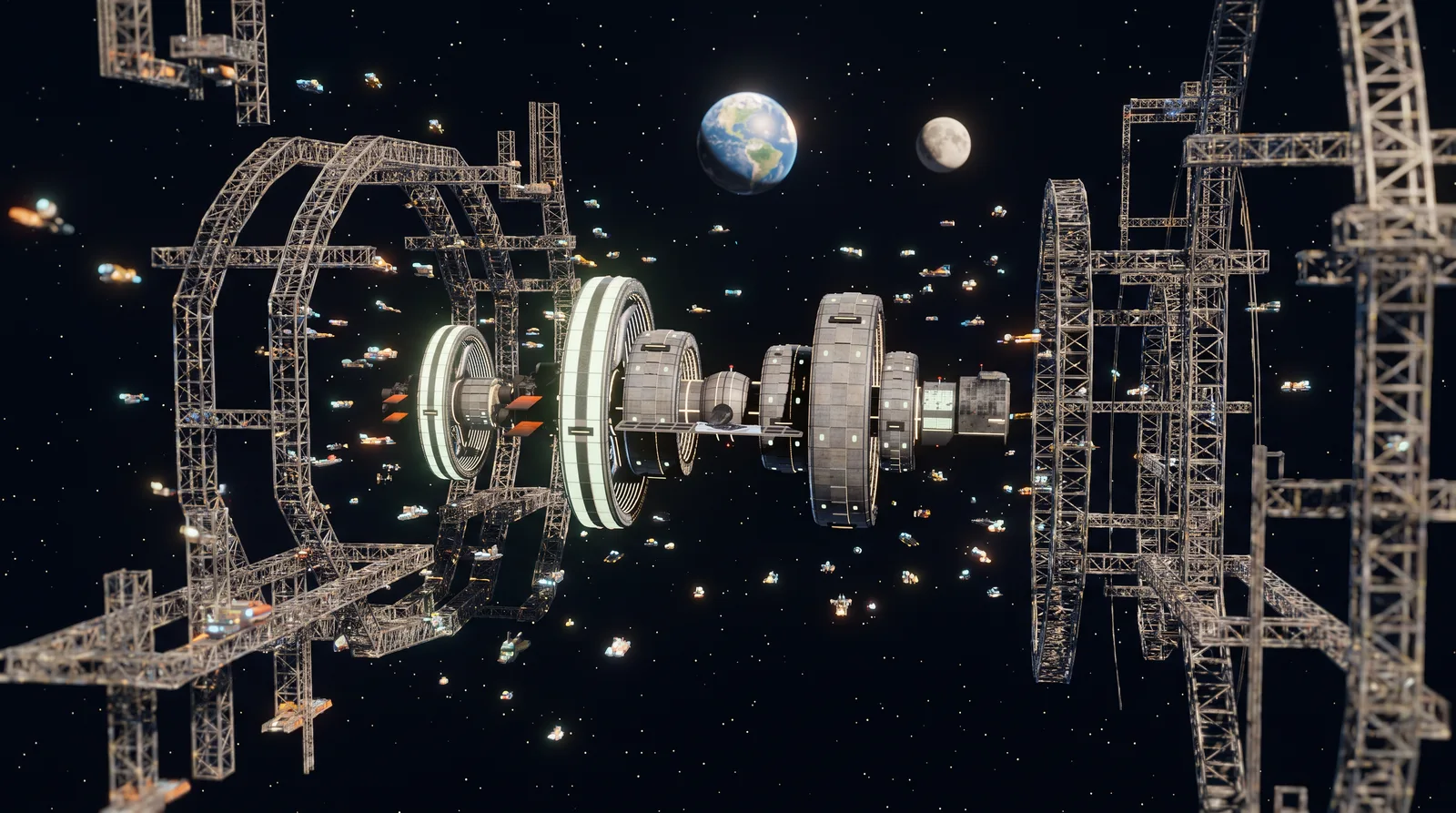
In the film's reconstruction the shipyards stood at the Lagrange point L5 of the Earth-Moon system, 384,000 km from both: a stable point, where what is set down does not drift away, with almost constant sunlight. That is where the solar panels the ship still carries were needed: near a star they produce, between the stars next to nothing.

The Moon as a quarry

Lunar regolith is 40% oxygen, then silicon, iron, aluminium, titanium: it gives metals, the glass of the vaults, the air. Leaving the Moon takes 2.4 km/s, against 11.2 from Earth: twenty times less energy per kilogram. A dozen electromagnetic catapults on the surface threw 50 kg blocks of compacted regolith, one a second each, towards a catcher at L5: nearly 20 million tonnes a year, on less than 3 GW of power. It took a century.

Ice and carbon from the asteroids

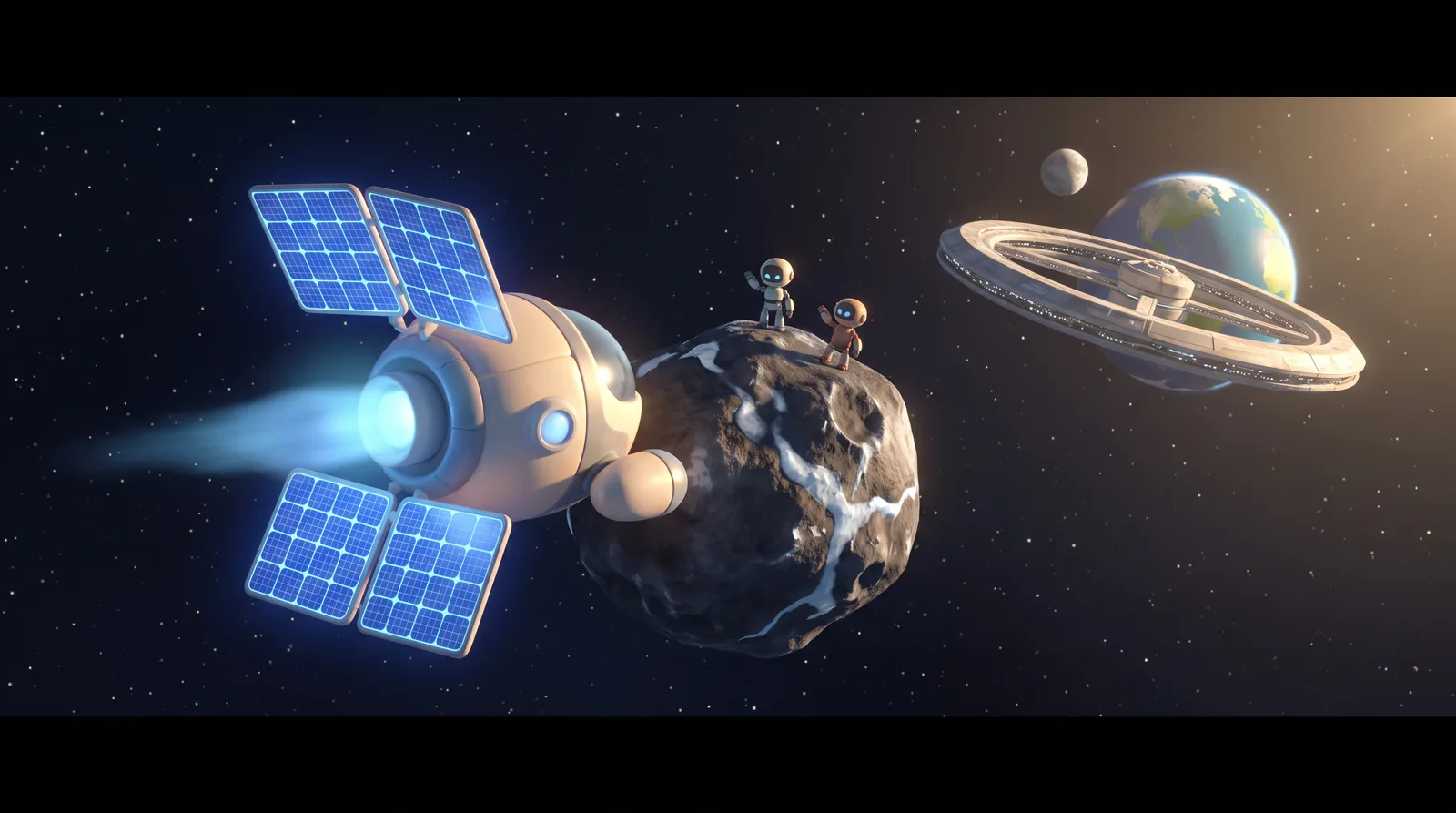
The Moon is poor in carbon and water. The carbon of the rings' fibres and the water of the vaults came from carbonaceous near-Earth asteroids, up to 20% water: solar-electric tugs pushed them towards L5 in a few years, since some need only a few hundred m/s to change orbit. A 300-metre asteroid weighs some twenty million tonnes: about a hundred were needed. The water also gave the hydrogen in the tanks; what was left of the rock, most of the rings' soil.

First the spine, then the rings

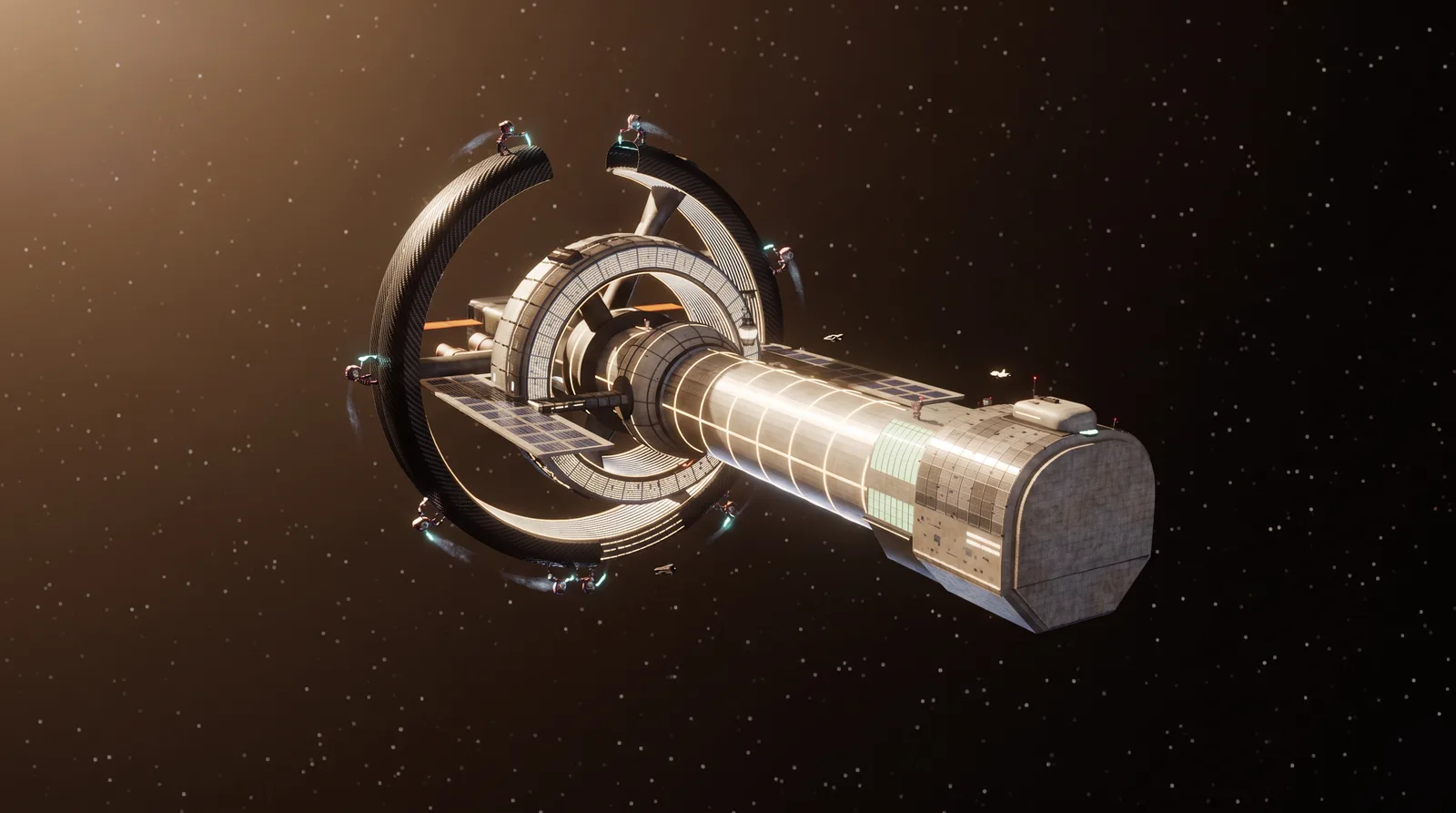
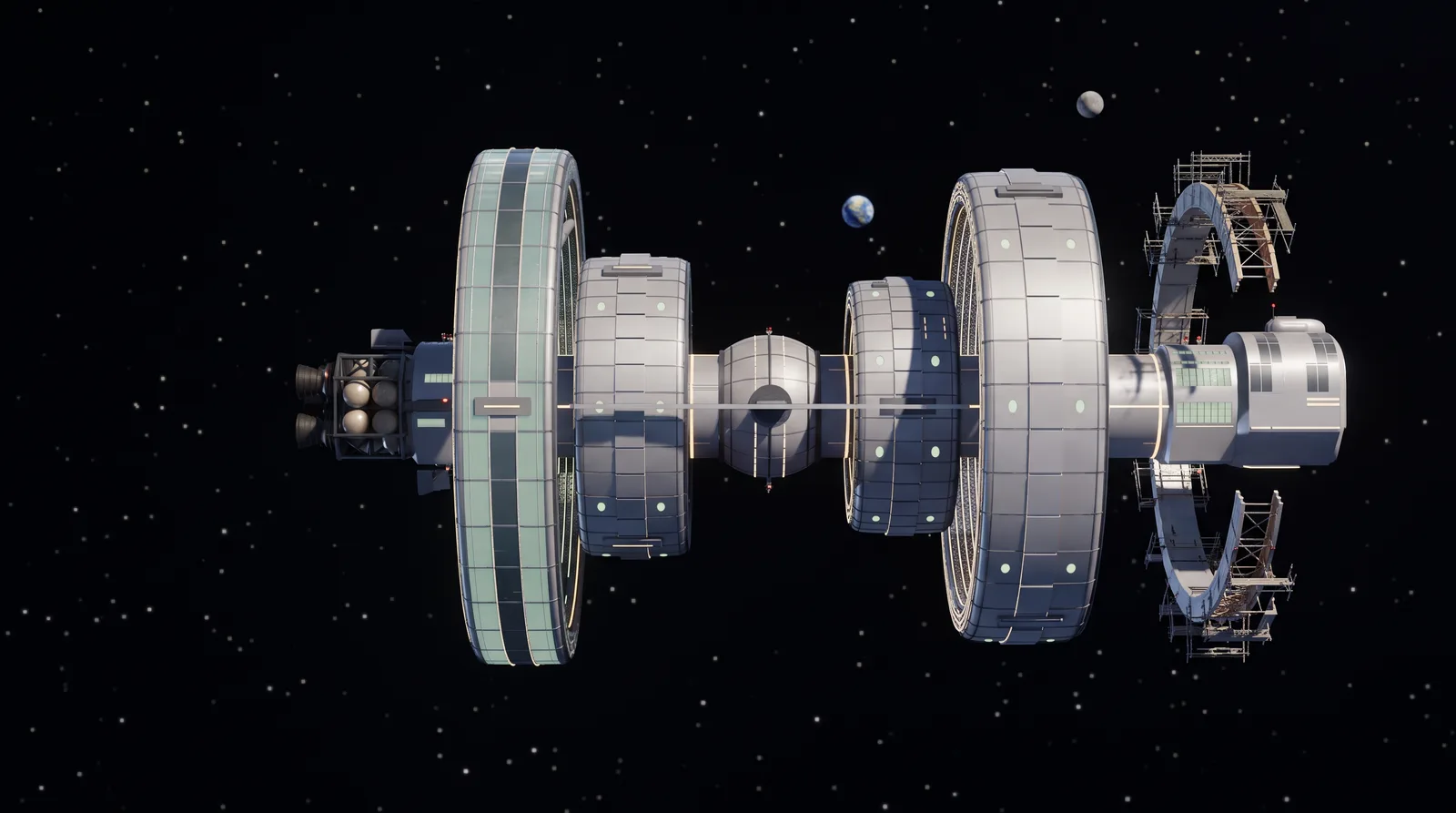
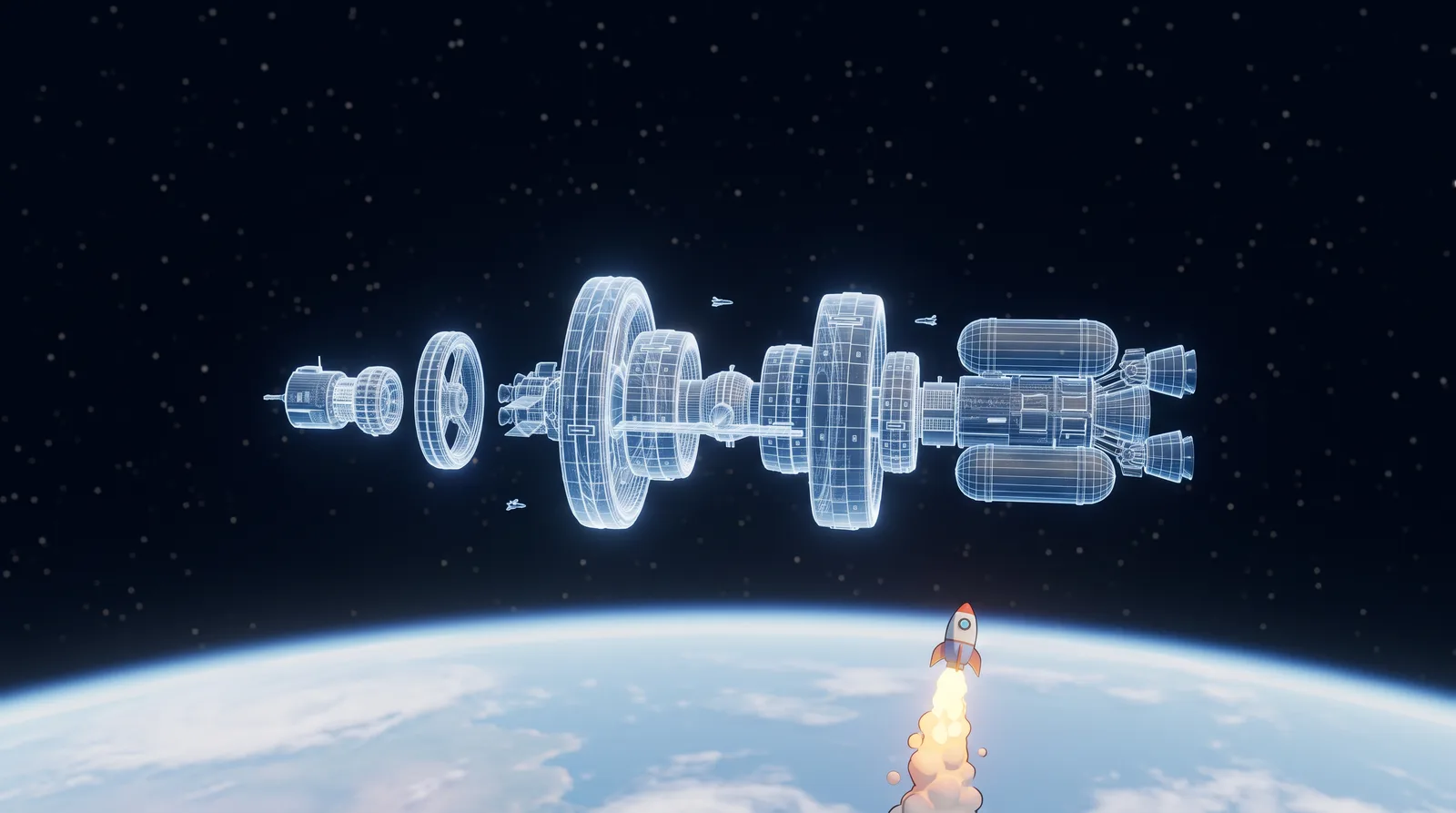
First the spine, the twenty-kilometre keel; then the hubs; then the spokes; last the rings, each in 36 sectors of 10°, wound in carbon fibre by robots circling the yard. A ring carries nothing until the last sector closes the circle: until then it stays still and unloaded. Once closed it is pressurised, its vault filled with water, its soil laid. Only then is it spun up, over months, one pair of rings at a time in opposite directions, so the ship itself does not start to turn.

What came up from Earth

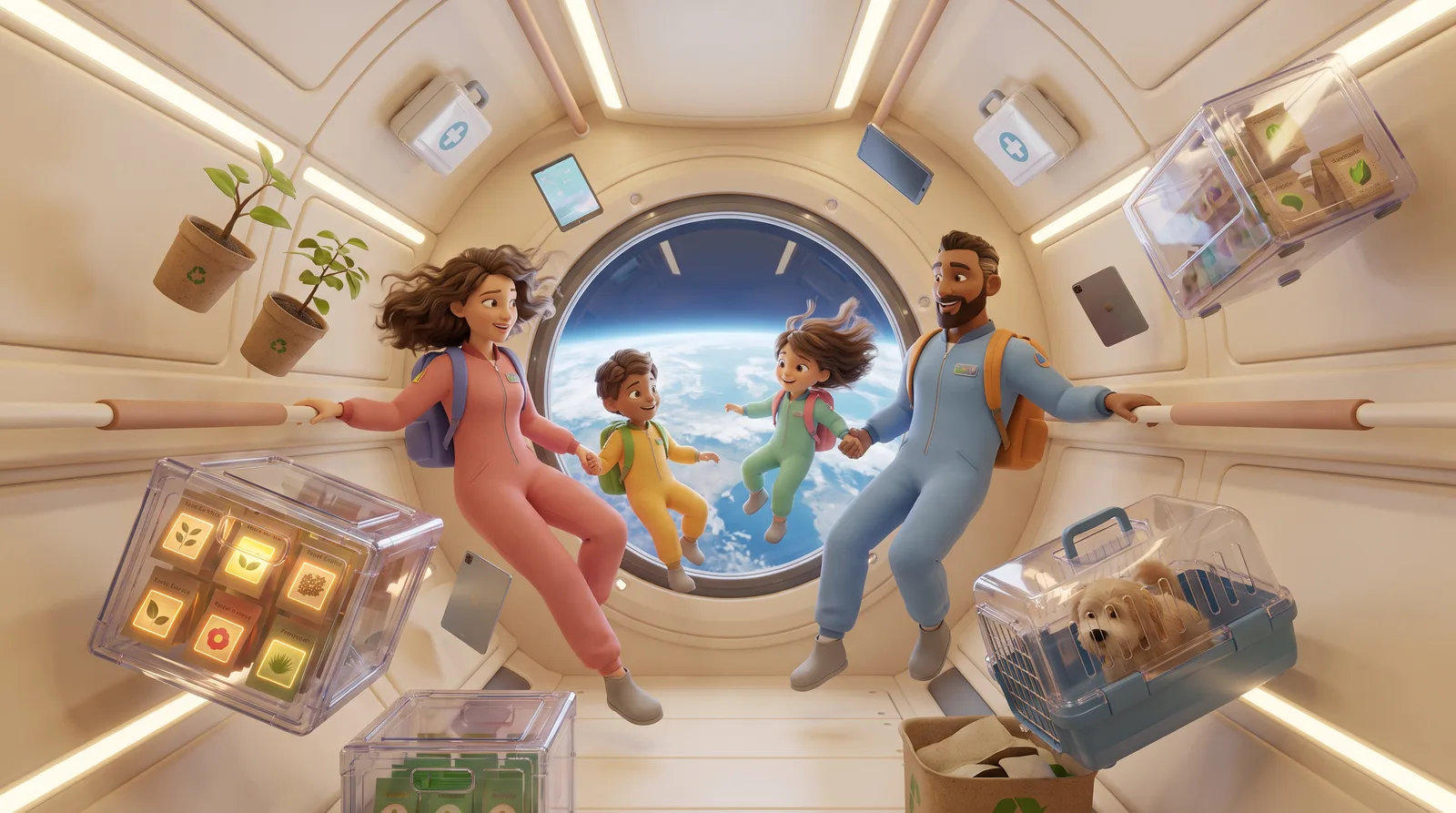
Barely two thousandths of the mass came up from Earth: the people, the seeds, the animals, the electronics, the tools, the medicines, the reactors' fuel. Two flights a week of reusable launchers for two and a half centuries make a few million tonnes: enough, because everything else was taken up there.

Why two and a half centuries

A century to mine and launch the material, decades to build. Then the slowest part: making the farm ring's soil fertile, balancing the air and water of a closed world, raising generations born aboard who knew the ship better than Earth. A generation ship is not tested: it is lived in, until it runs by itself.

The shipyard's calendar

Years count back from the departure, like the ship's calendar. From year −250 the lunar catapults and the asteroid tugs pile up material at L5 for a century. From −150 the spine goes up with the bow and stern modules, from −135 the hubs and the central sphere, from −125 the spokes. The rings are built in pairs that turn opposite ways: 5 and 4 from −118, 3 and 2 from −110, 1 from −100. When ring one too is turning at full speed, in year −93, the ship is finished. Ninety years remain to fill the vaults with water, spread the soil and make it fertile, balance air and water, and raise the generations who will leave. The book only says «two and a half centuries»: the phases are the film's reconstruction, and the ones the route viewer shows, in History and curiosities.

Departure

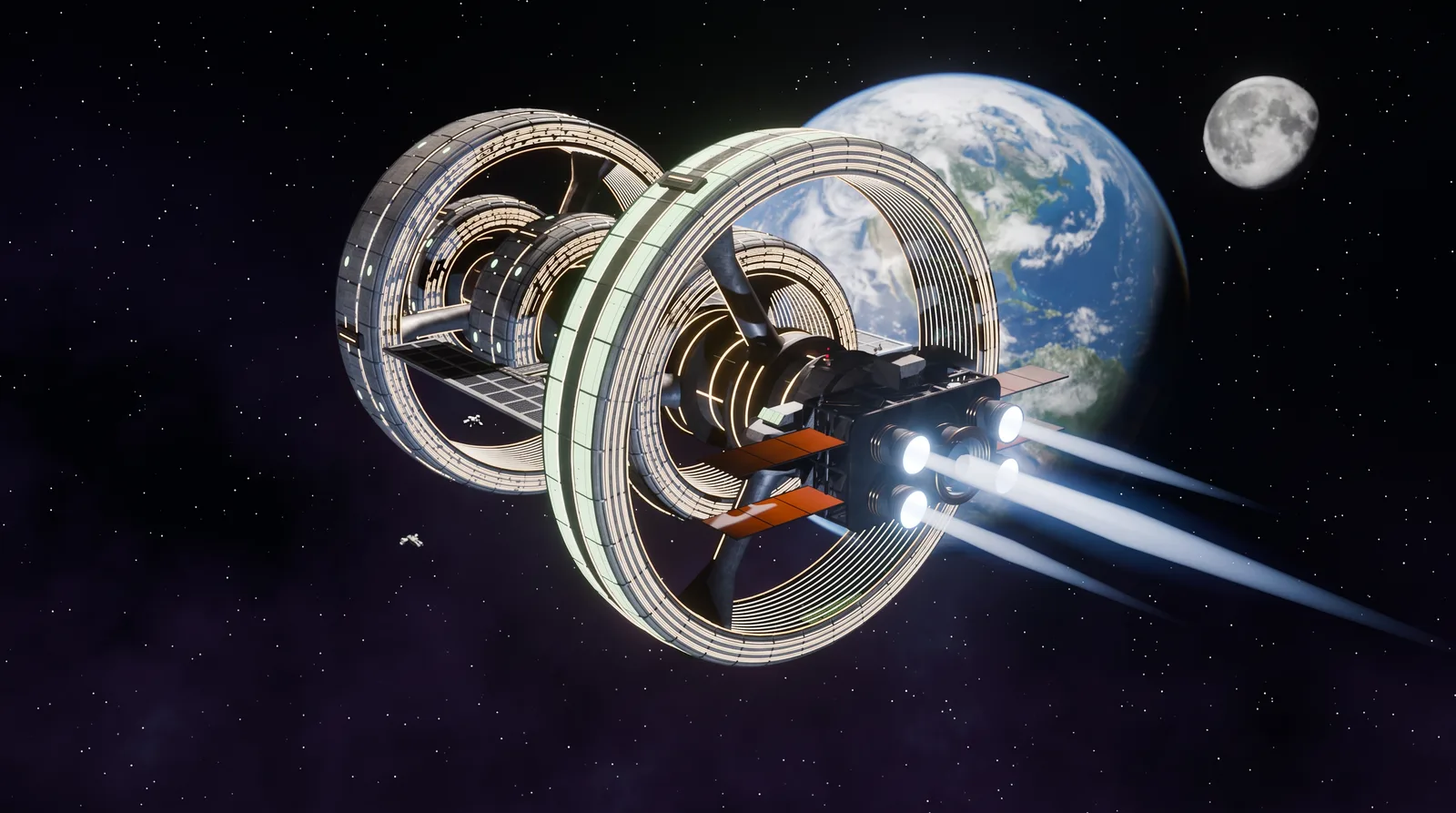
The Ark was never launched: it was already in orbit. It left the yard by lighting its engines at cruise thrust, a hundredth of a g: little, but without pause it gains more than 8 km/s a day. It left the Earth-Moon system in a few hours and escaped the Sun in a few days. After a month, Earth was a point among the stars.