Cómo funciona el Arca Luminosa

La física de la nave de Heidolon, con las cifras del modelo 3D de la película.

Gravity is a rotation

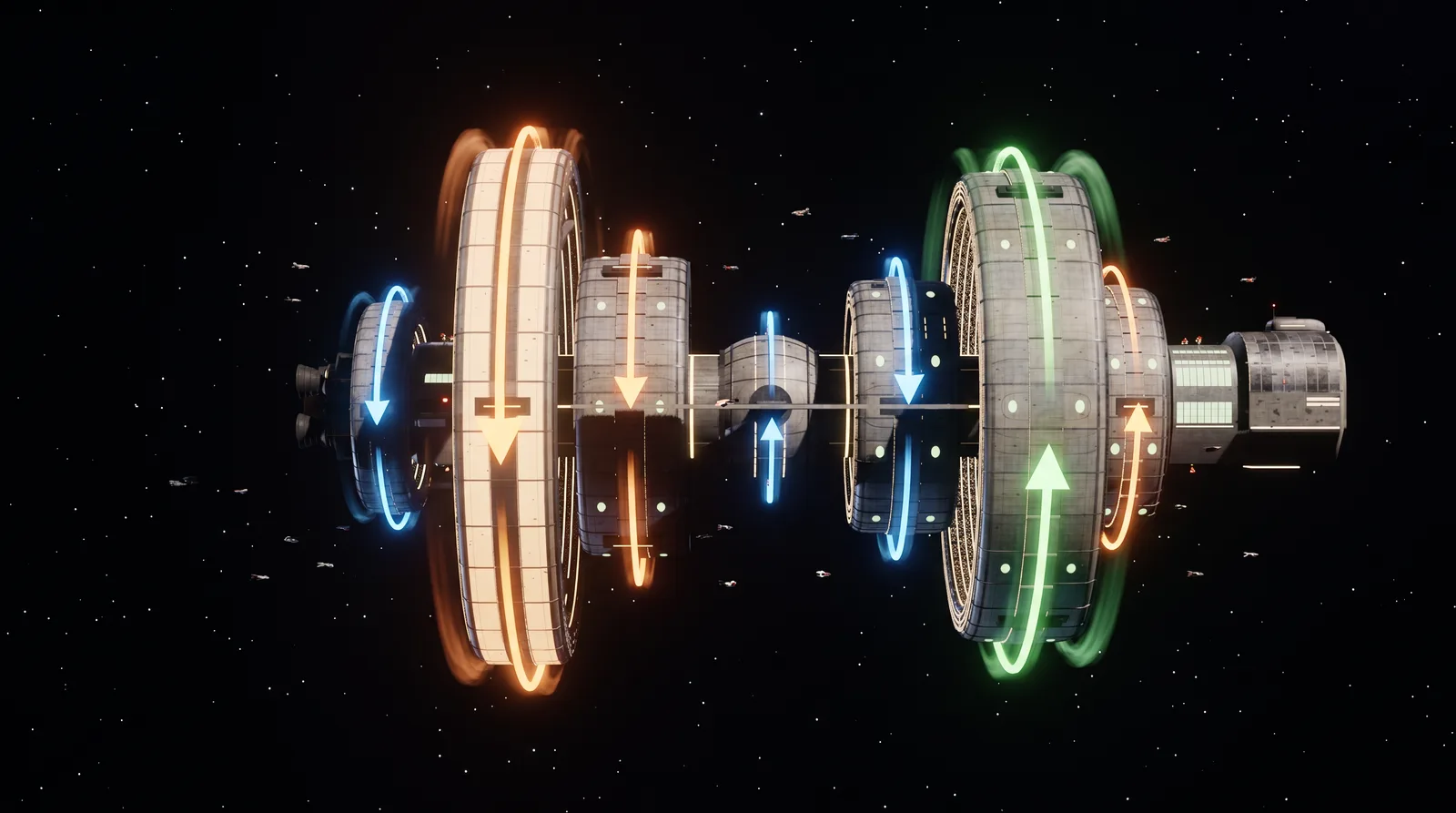
No engine presses people to the floor: the ring turns. On the floor, on the outer side, the spin gives exactly 1 g, because every ring has its own speed: ω = √(g/r). A larger ring turns more slowly: ring five once in 141 seconds, ring one in 94. All of them stay under 2 turns a minute, the threshold above which the inner ear suffers.

The higher you go, the less you weigh

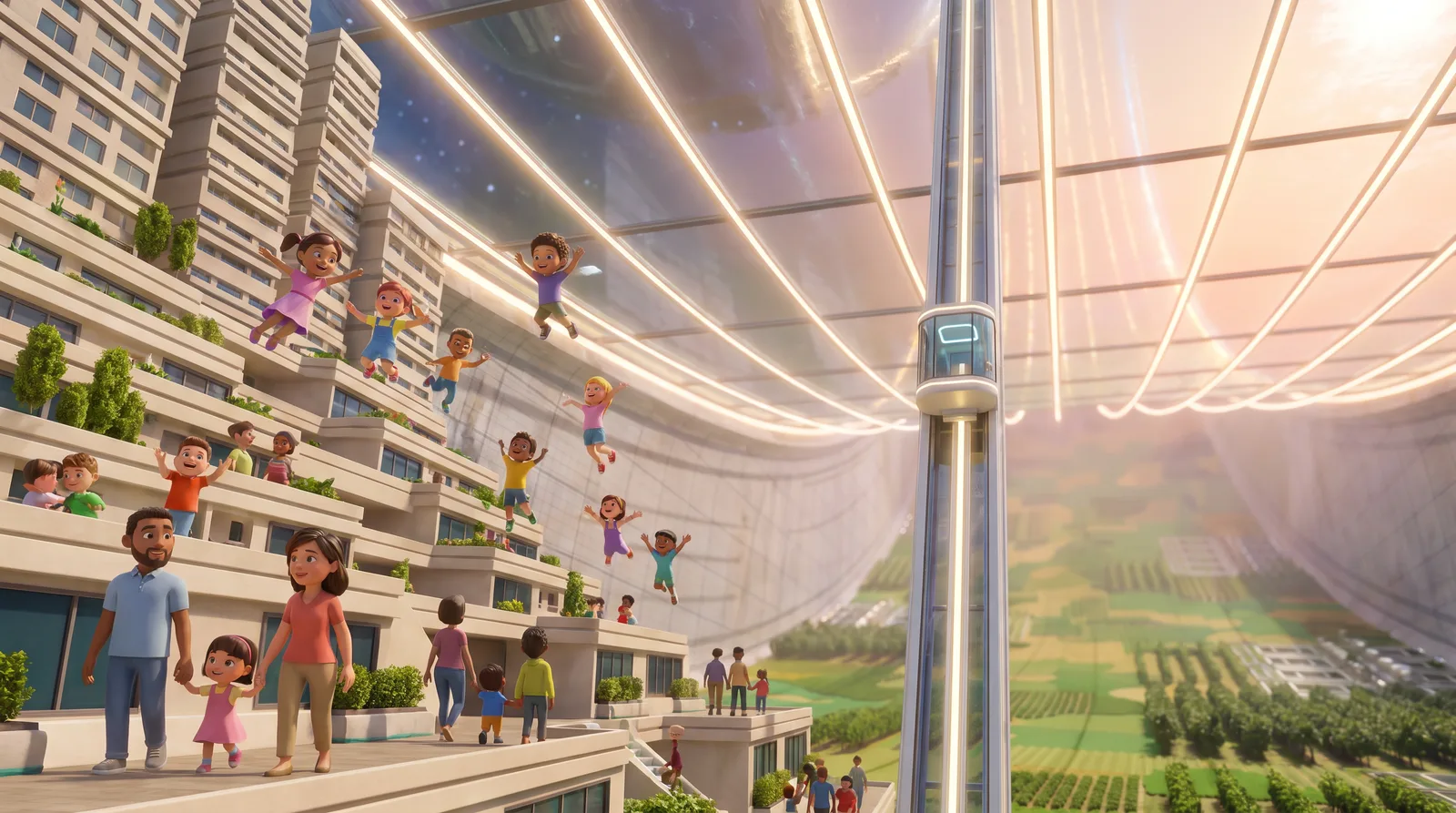
The rings' section is more than 650 metres tall: climbing from the low districts towards the vault, gravity falls to 74–88 %. The upper levels are the «light» quarters. Along the spokes it falls further, to zero on the axis: the ride of the radial lift.

Rings that turn in opposite directions

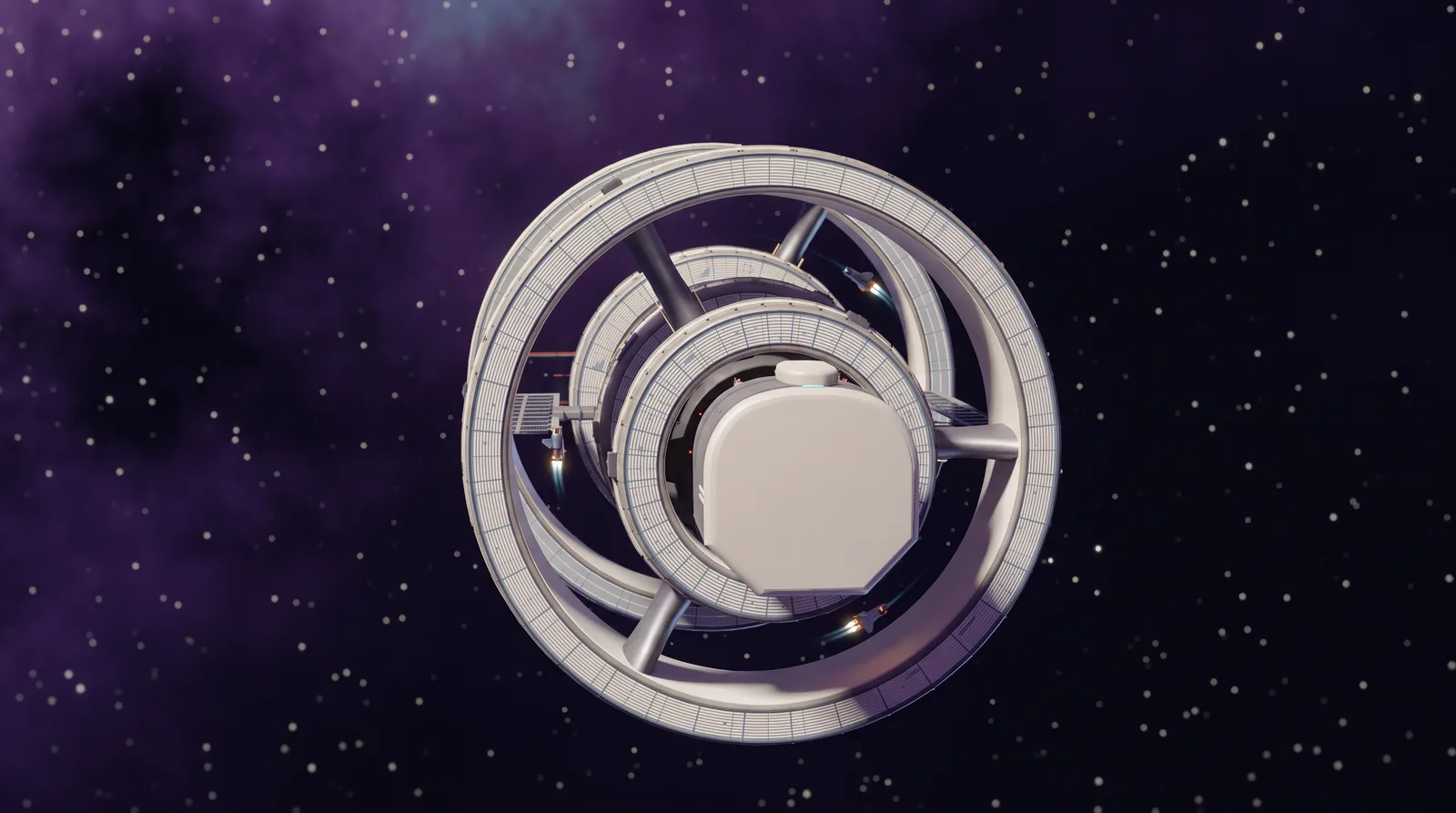
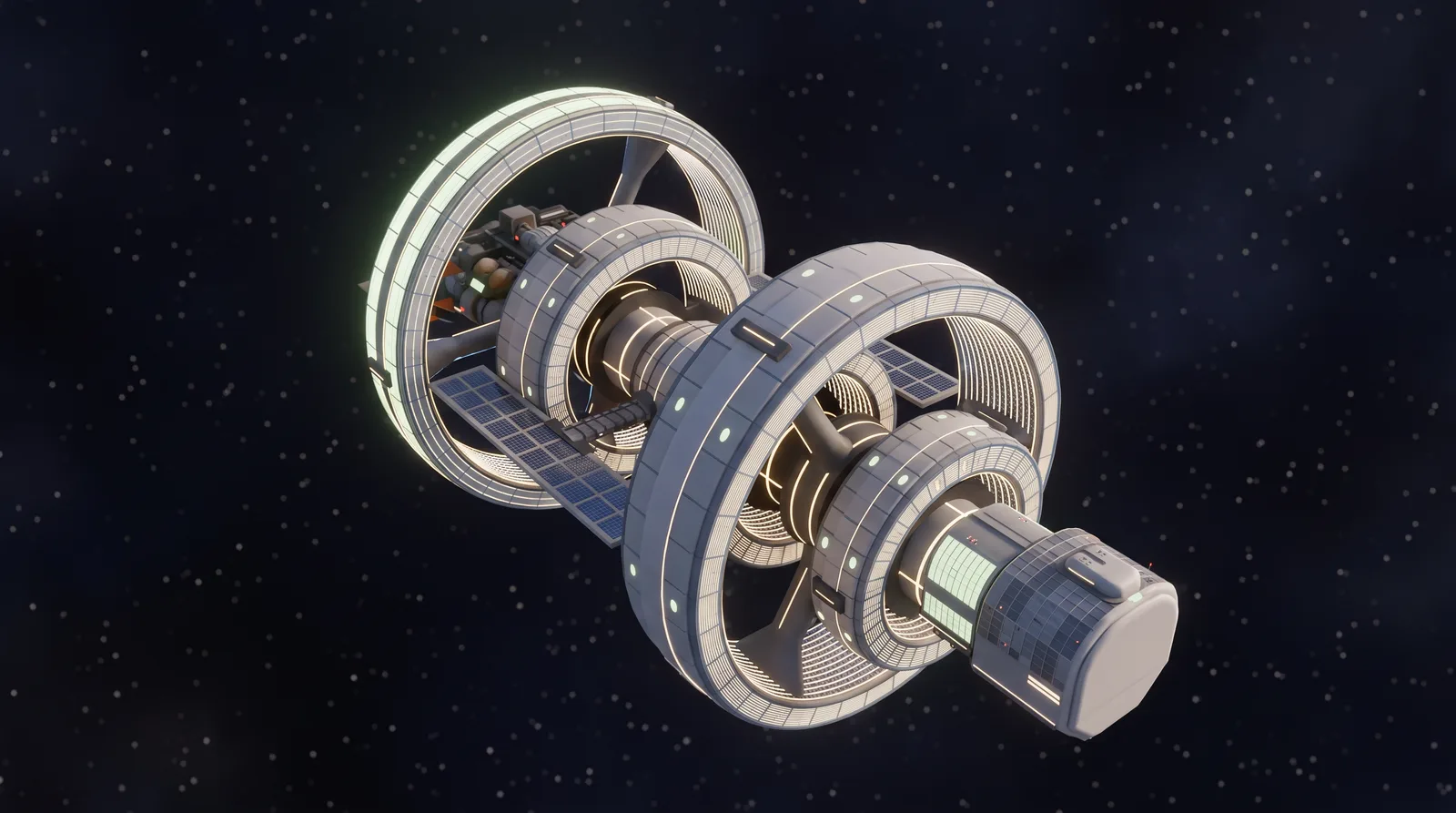
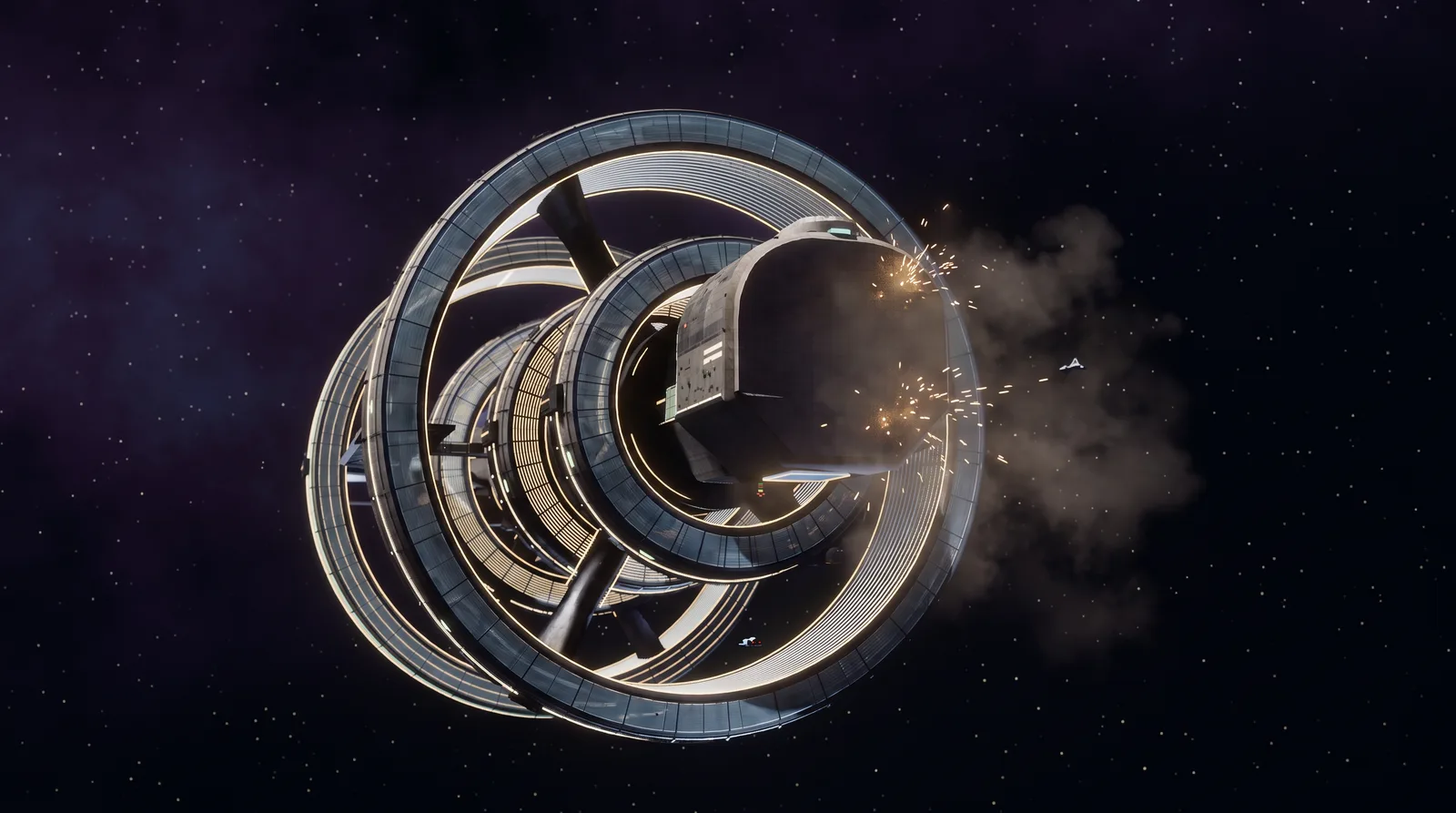
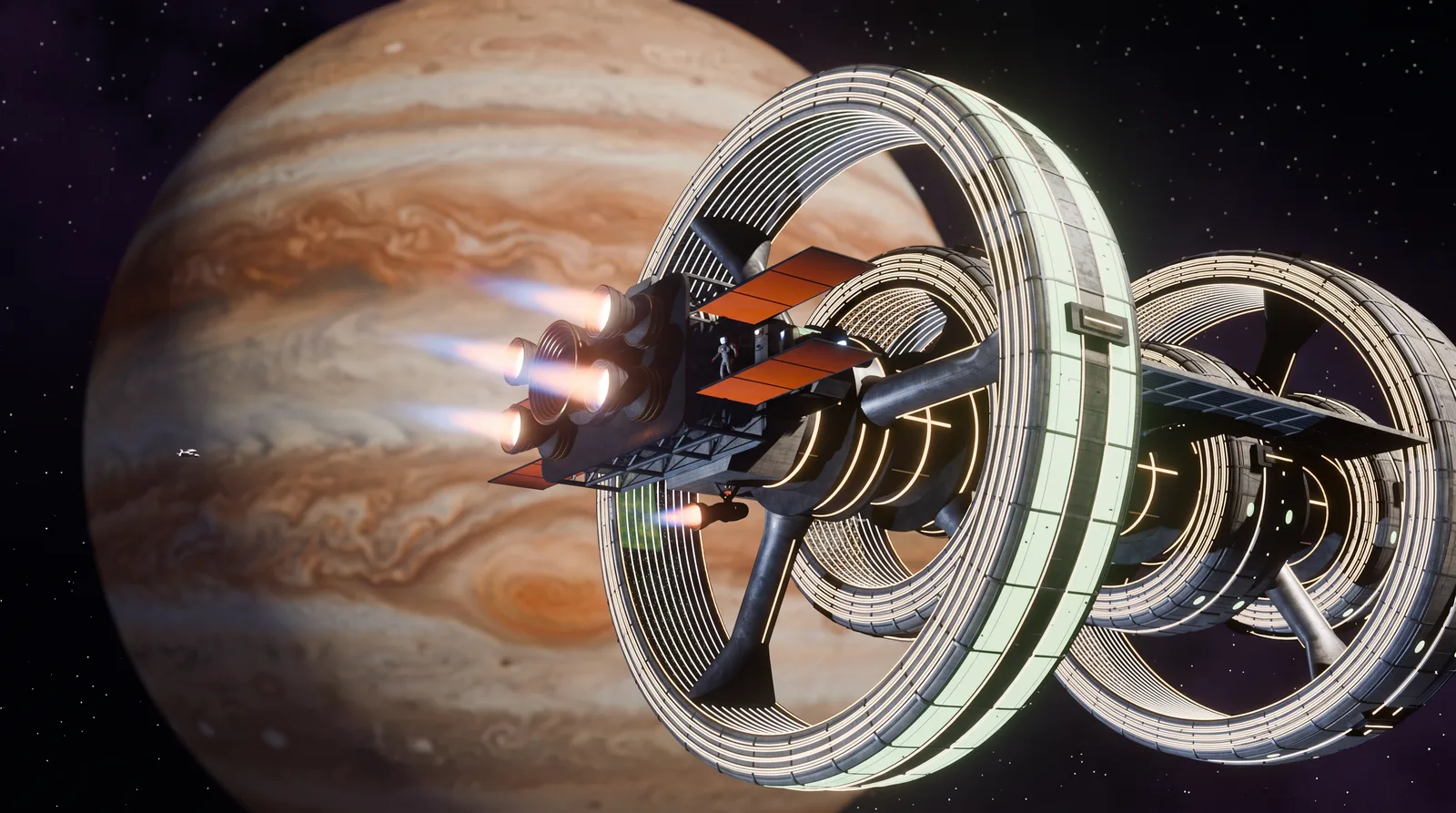
Rings one, three and five turn one way, two and four the other. A ring's angular momentum grows as width × radius^2.5: that is why the rings are not equally wide. Ring three has the width that brings the total back to zero. Without this balance the ship would be a gyroscope of billions of tonnes: every sideways push would make it precess instead of turning.

What keeps the rings turning

Once started, the rings turn by themselves: in a vacuum there is no air to slow them, and the hubs' magnetic bearings carry them without contact. Like the Earth, they spend no energy to keep spinning. Energy is needed to start them, to make up small losses and to trim their speed when people, water and harvests move about. It comes from the fusion reactors, like all the power on board: the hubs' bearings are electric motors too, pushing the ring against the spine, and when they brake it they give the energy back. Since the rings turn in opposite directions, they can be spun up by pushing them against each other through the spine, without turning the ship. The spin-up was a shipyard job: with a few tens of tonnes per square metre of floor, the spin energy of the five rings is of the order of a hundred and seventy petajoules, five years of a one-gigawatt reactor. The book does not say: it is the model's assumption.


A ring holds itself

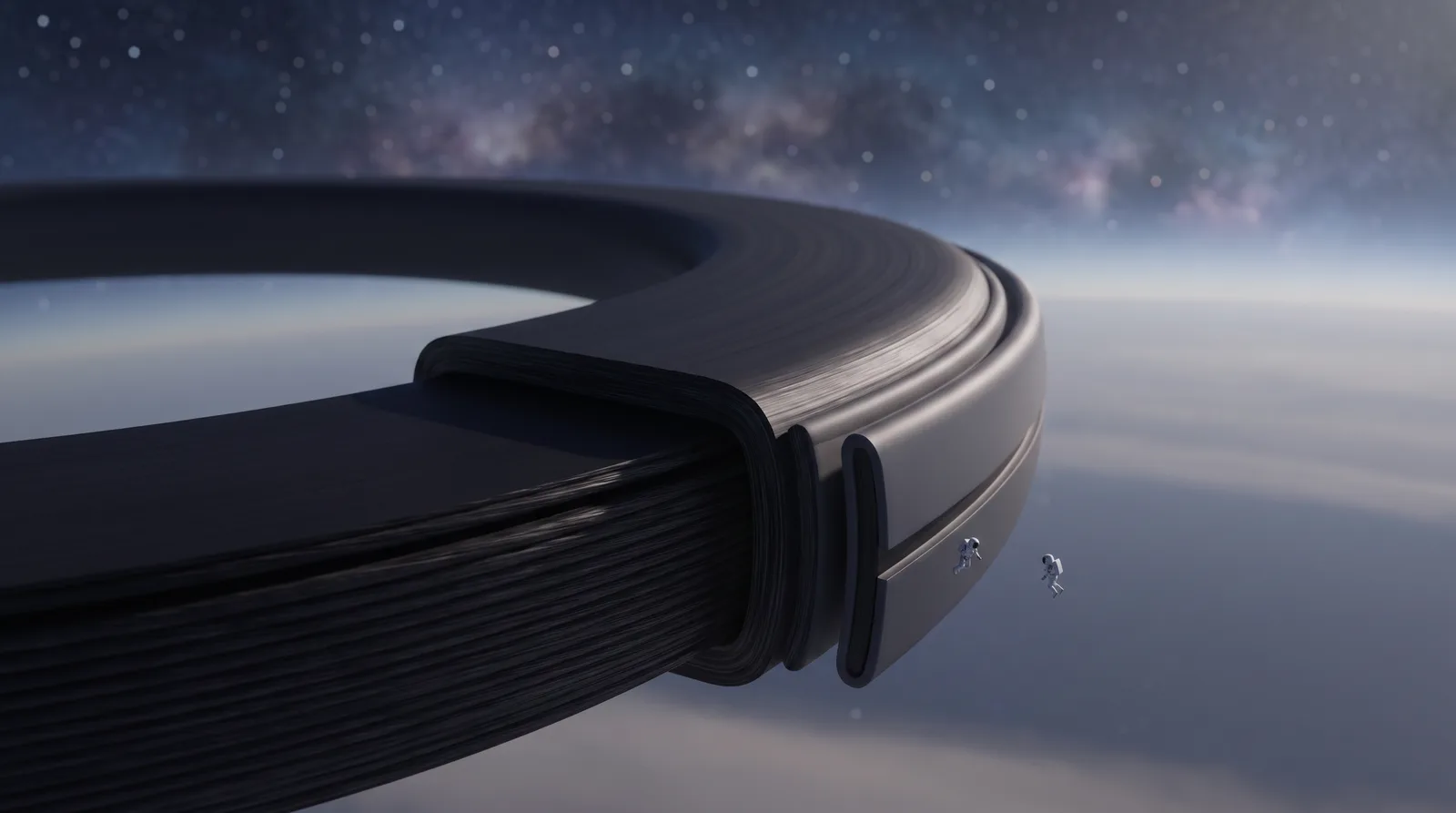
A spinning ring is in tension around its circumference, like the rim of a wheel. The stress is ρ·g·r and does not depend on thickness: from 36 MPa in ring one to 78 MPa in ring five, in the carbon-composite shell. So every tonne of structure can carry 15 to 33 tonnes of soil, water, air and houses: the two large rings carry less, because their hoop works harder.

Three massive spokes

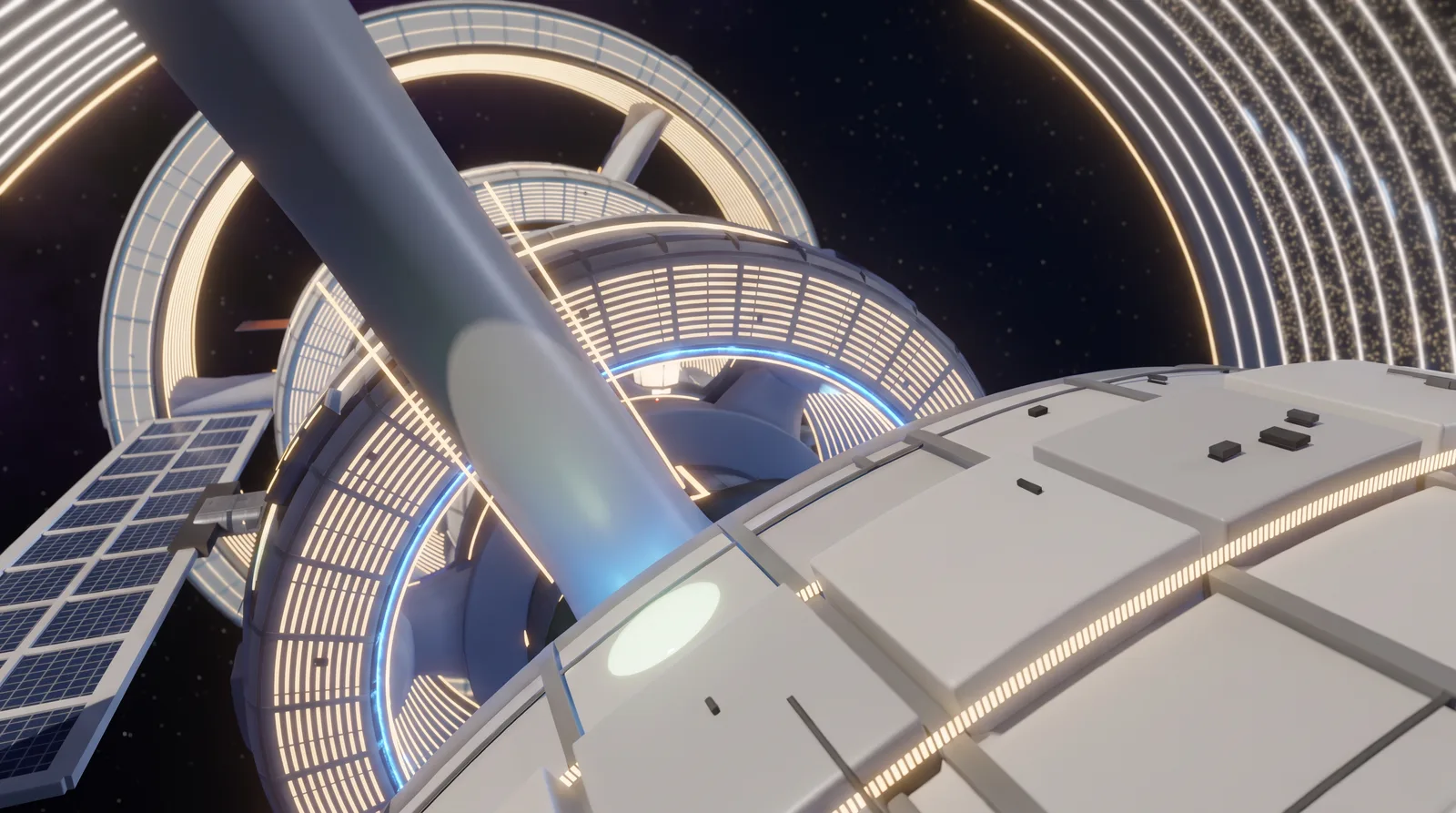
Each ring is tied to its hub on the spine by three spokes only, and nothing else. They do not hold the ring together (its hoop does): they carry their own weight, thicker towards the hub where the stress is highest; they push the ring when the engines accelerate the ship, which is why they are blades deep along the axis; and they pass on the torque when the spin is started or corrected. Near the ring they fan out until they span the vault and rest on both shoulders of the shell: no load passes through the glass. The lifts run inside them.

A sky of glass and water

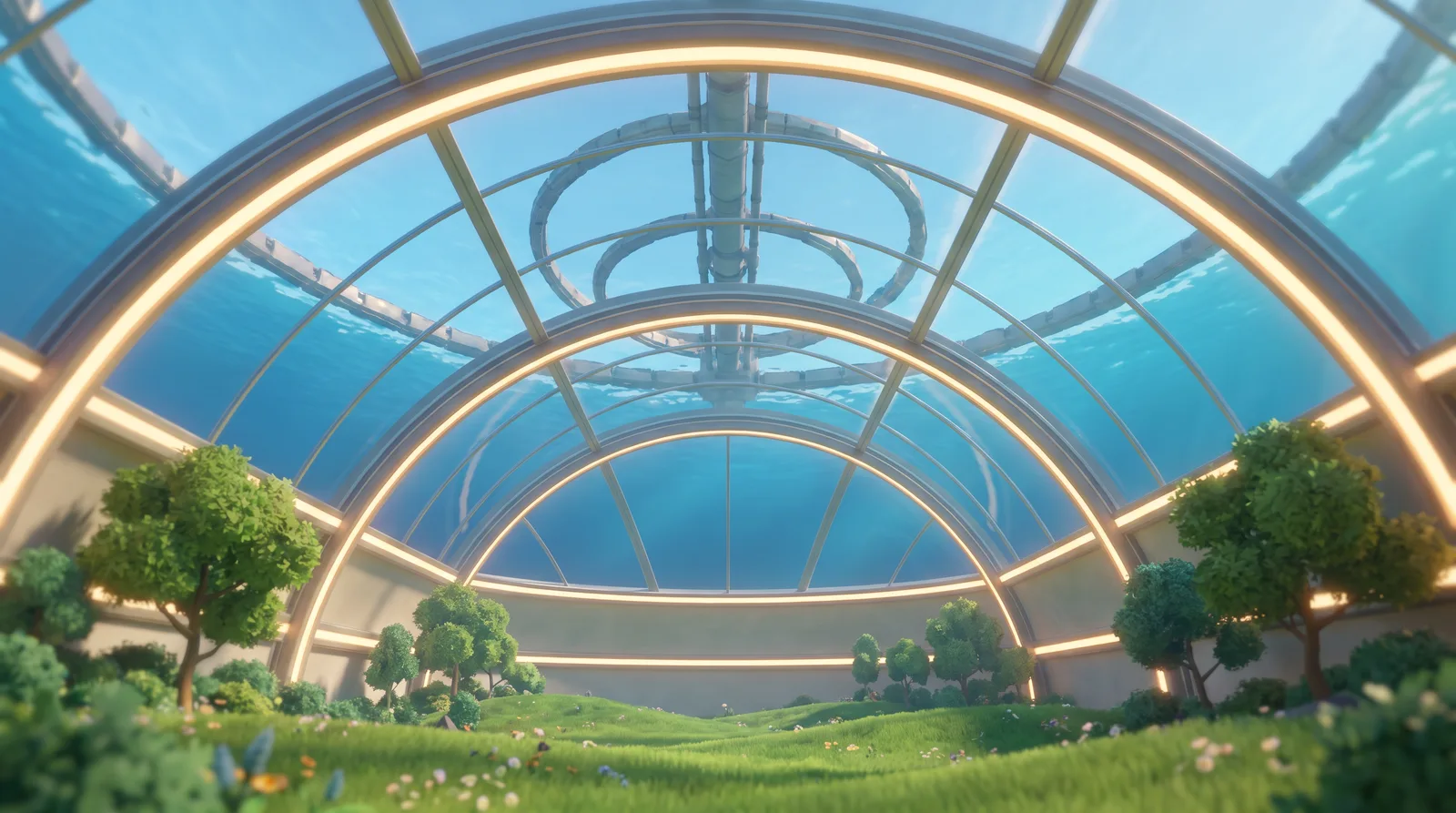
The ring's side facing the axis is a glazed vault: two panes with metres of water between them, shielding radiation as well as half an atmosphere. A vault two kilometres wide would be a glass bridge: so it is divided into 160-metre bays resting on circular ribs that carry the lamps of the artificial day. From inside you see the spokes, the spine with its golden bands, and the stars, which go round once every turn of the ring.

A ship with a back

Only the rings are solids of revolution. The still hulls of bow and stern have a back, a belly and two sides: a vault on top, straight sides, two chamfers and a narrow belly. In the middle, between ring 3 and ring 4, the midship station is a sphere 2.8 km across enclosing the Core: the shape that holds pressure with the thinnest shell. There is no spin gravity in the still part: that is why, in the book, the outer-sector workshop has «low-gravity» corners «where the rotation of the rings could barely be felt».

Against the dust

At a fraction of the speed of light, interstellar dust is the real danger, and it only hits what looks ahead. The protection is spread out: the bow's sacrificial plate covers the spine and the greenhouses, every ring carries a transparent shield on its bow face, and the rest is edge-on or in shadow. Particle storms, like the one of chapter 16, are met with the shields and by closing the greenhouse domes.

Tanks that shield

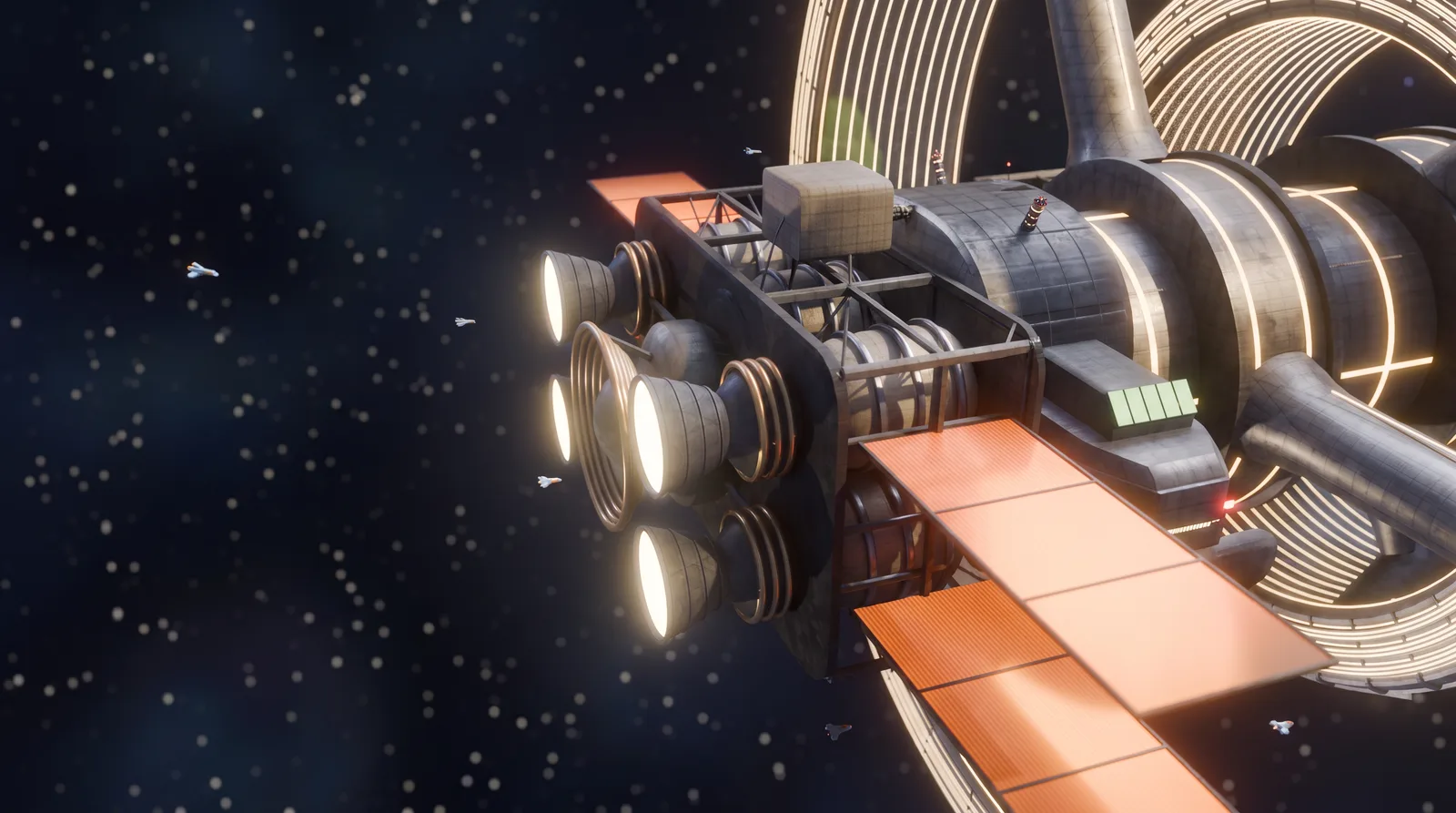
Behind the stern section six propellant tanks sit in a frame, and behind them the thrust plate and the engines, each in line with its tank. Hydrogen is the best shield against the reactors' neutrons: placed between the reactors and the rings, it protects the people without adding a kilogram.

Three engines for Argo

The Ark cannot steer with its engines alone (ch. 9): it uses the gravity of the gas giant Argo to bend its course towards Canto. The three lateral engines correct the trajectory. Each points along the line joining it to the centre of mass: fired together they move the ship without turning it, but if one fires out of step the other two twist the hull. That is why the synchronisation relay matters so much.

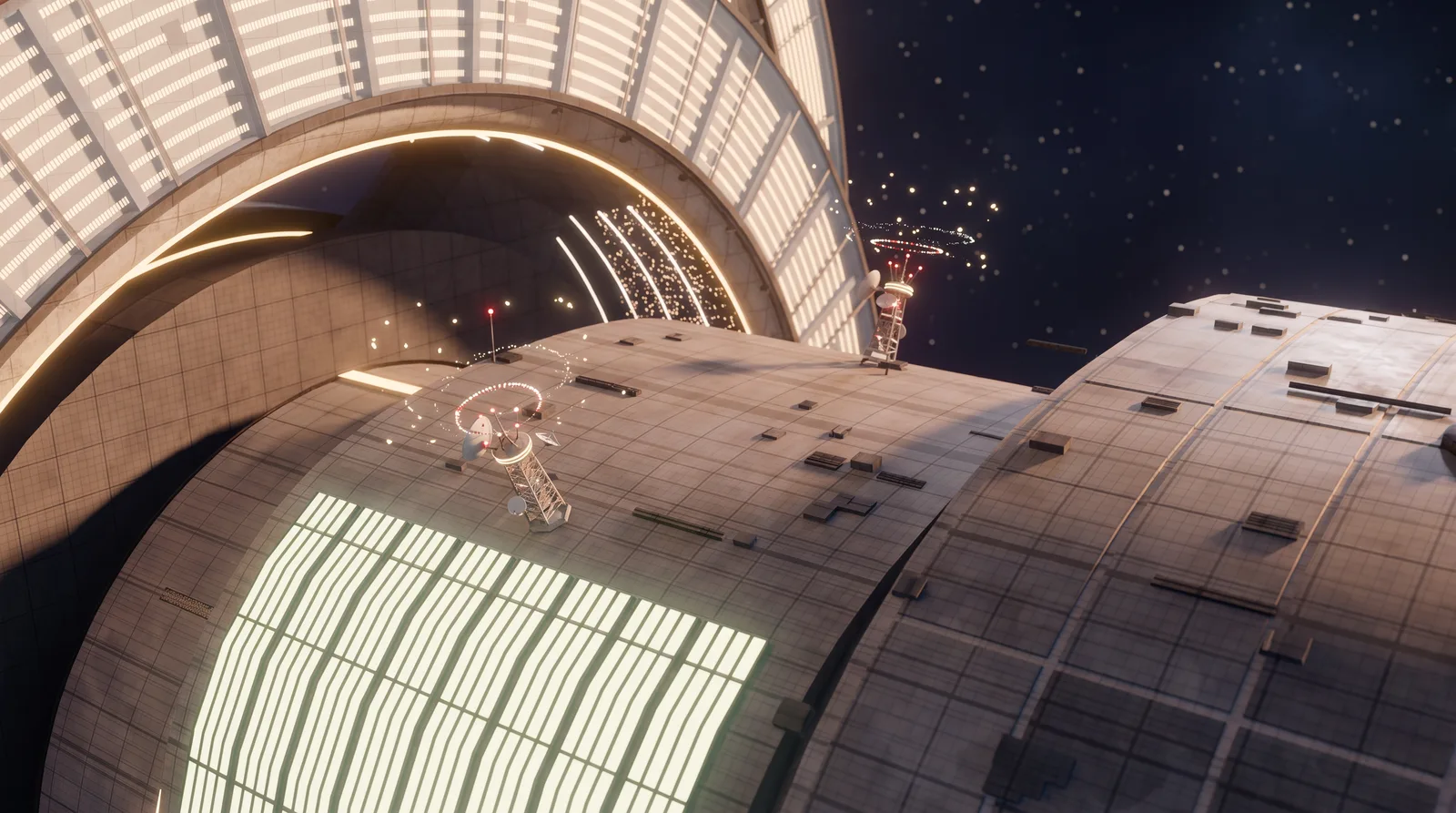
Towers on the still part

The antennas stand on the towers of the still part because a dish on a ring would have to chase its target once every two minutes. The towers are lattice masts up to six hundred metres tall, two on the back and one under the belly of each still part; the large dish of each looks astern, the others follow the probes.