
The problems draft2cut is built to solve

Making a finished piece with AI is harder than generating a clip. These are the problems we hear most, and what draft2cut does about each.

Getting from a script to a finished video

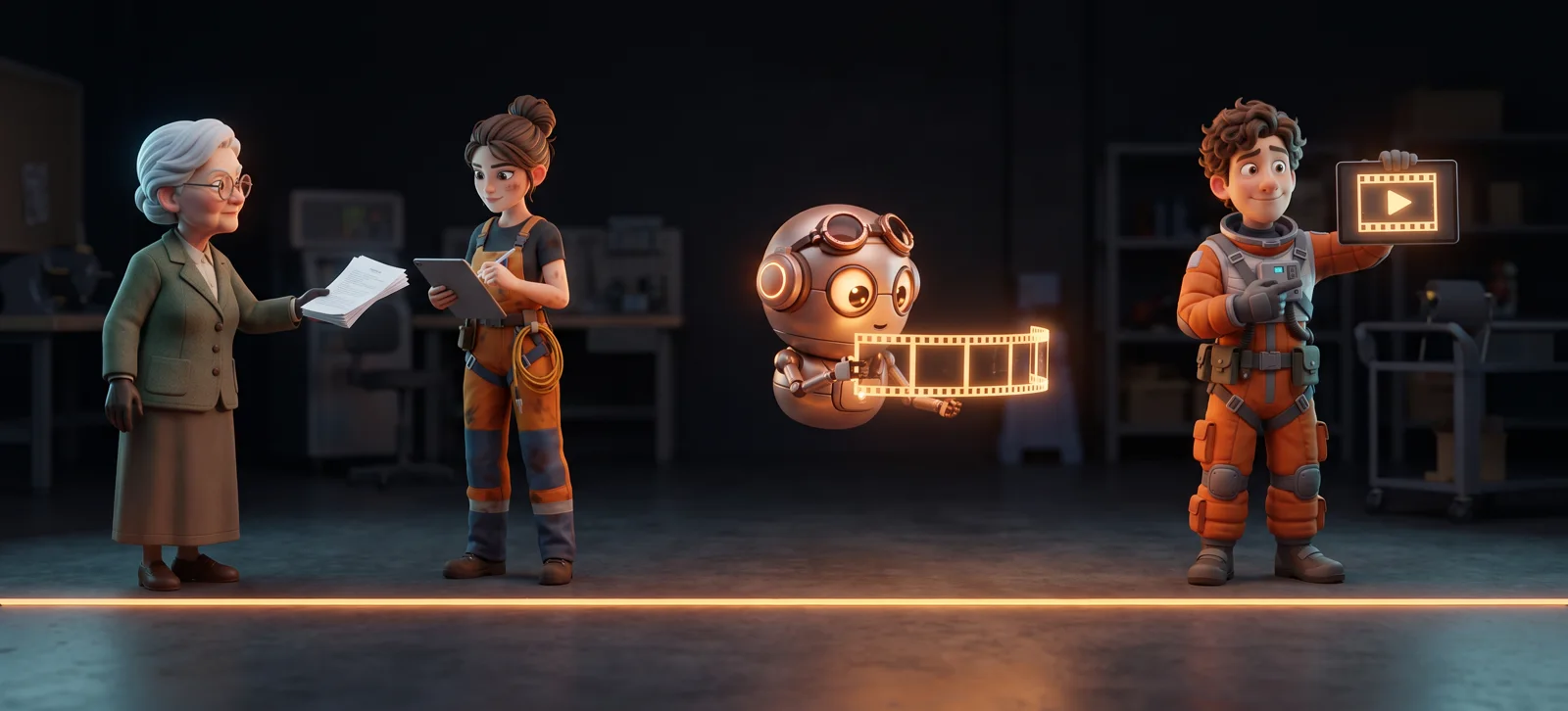
A script passed along one production line: an elderly woman hands it over, a young woman designs a character, a floating robot assembles film frames, and a young man holds up the finished film.

Making a finished video with AI takes many tools and many manual steps

Why it hurts. Writing, concept art, storyboards, voices, music, video clips and editing each live in a different place, and the work of tying them together cancels out the time saved.

What draft2cut does. One pipeline from idea to an edited video, with dialogue, music and subtitles; each stage feeds the next.
The same character does not look the same from one shot to the next

Why it hurts. A series needs recognizable characters across hundreds of shots; clips generated one by one drift.

What draft2cut does. Each character has a reference image, an eight-view turnaround, outfits, expressions and a voice; every shot uses the cast and the outfit chosen for that scene.

The script and the visuals live in different tools

Why it hurts. Every change in the script has to be redone by hand in storyboards and references.

What draft2cut does. The script is the backbone. The breakdown extracts characters, locations, scenes and shots, and versions are kept.

A good result needs many attempts, and the good ones get lost

Why it hurts. Teams regenerate shots again and again and lose track of which version was best.

What draft2cut does. Every generation is kept as a take: compare, choose, and go back.

Dialogue, music and picture are produced separately and never quite match

Why it hurts. A wrong line means redoing the whole exchange; music has to be fitted by hand.

What draft2cut does. Dialogue is generated and edited line by line with a voice per character; music is placed per scene; lip-sync handles more than one speaker; the mix can be re-synced after changes.

A pitch or development package takes weeks and several freelancers

Why it hurts. Concept artists, a storyboard artist and an editor have to be coordinated against a deadline.

What draft2cut does. One person can prepare character and visual references, storyboards, a preview and the documents in the same place, and iterate on them.

Commissioners and post-production expect specific files

Why it hurts. A series bible, character and visual bibles, a storyboard, subtitles and a timeline for the editing suite each have their own format.

What draft2cut does. draft2cut exports a literary bible, character, environment and prop bibles, a storyboard PDF, subtitles, the screenplay, an edited video and an XMEML timeline for Final Cut Pro and Premiere, so work can continue in a professional editing suite.

AI models change or disappear

Why it hurts. A project built on one tool is stuck when that tool changes.

What draft2cut does. The project is independent of the engine: choose the engine for each role and change it per project.

Generation costs come as a surprise

Why it hurts. Many small generations add up unnoticed.

What draft2cut does. Every generation is logged with its cost and attributed to a person; cost controls are part of the organization settings.

Rights, regulation and trust

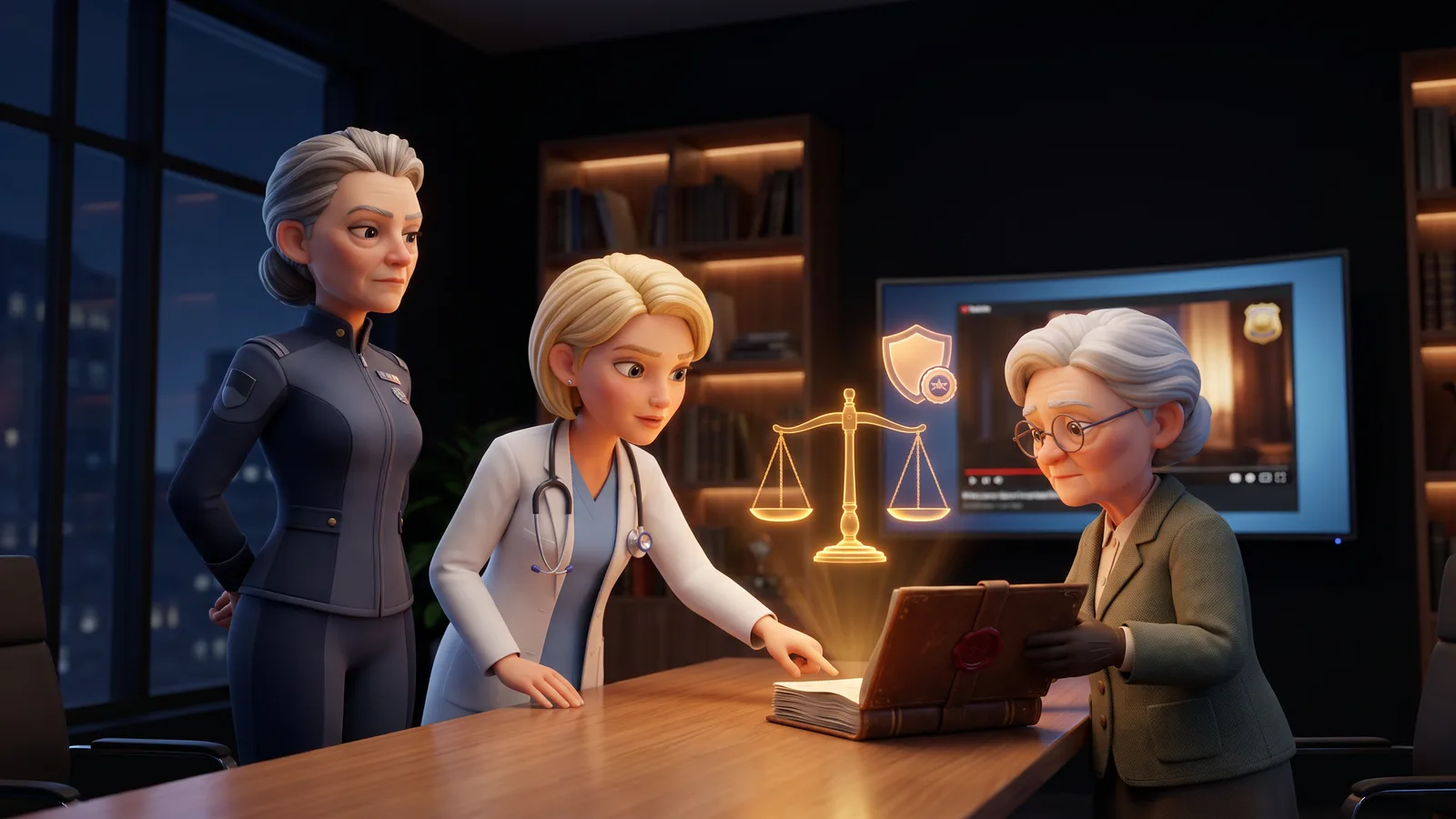
Three colleagues examining a sealed rights dossier, with a glowing balance scale and a shield above the table and a video frame with a small round badge on the monitor behind them.

It is unclear what was generated, by which model, and under which terms

Why it hurts. Buyers, insurers and broadcasters ask for provenance and for the commercial terms of the tools used.

What draft2cut does. Every generation is recorded; a rights dossier lists the models used and their providers' terms of use.

AI-generated content must increasingly be labelled

Why it hurts. Rules such as the European AI Act's transparency obligations, and platform and client requirements elsewhere, ask for AI content to be identifiable.

What draft2cut does. Exported video carries a visible AI label by default, with machine-readable metadata; turning it off requires a recorded, deliberate choice.

Real people's faces and voices raise consent and privacy questions

Why it hurts. In the EU, in several US states and elsewhere, using someone's likeness or voice can require notice, consent and a retention policy; some performers' agreements add their own rules for digital replicas.

What draft2cut does. Every character is declared fictional or real; a real person requires a recorded release and the biometric notice before images can be uploaded; the policy and the notice are published.

Who owns the output, and can it be protected?

Why it hurts. Protection under copyright depends on human creative input, and the rules differ between countries.

What draft2cut does. draft2cut records the human choices (script, shots, selections) alongside what was generated. It documents; it does not promise protection.

Data rules differ by country, and clients ask where their data goes

Why it hurts. Privacy law, data transfers and procurement requirements vary, and a project may contain personal data of actors and crew.

What draft2cut does. Separation between organizations, encrypted keys, your own provider accounts if you prefer, engines that run on your own machines, export and deletion of an organization's data, scheduled removal of discarded versions, and a public list of the service providers involved.

Some countries and parties cannot be served

Why it hurts. Sanctions and export rules restrict who a software service may be offered to.

What draft2cut does. Access is restricted for embargoed countries, according to a documented list.

Working as a team

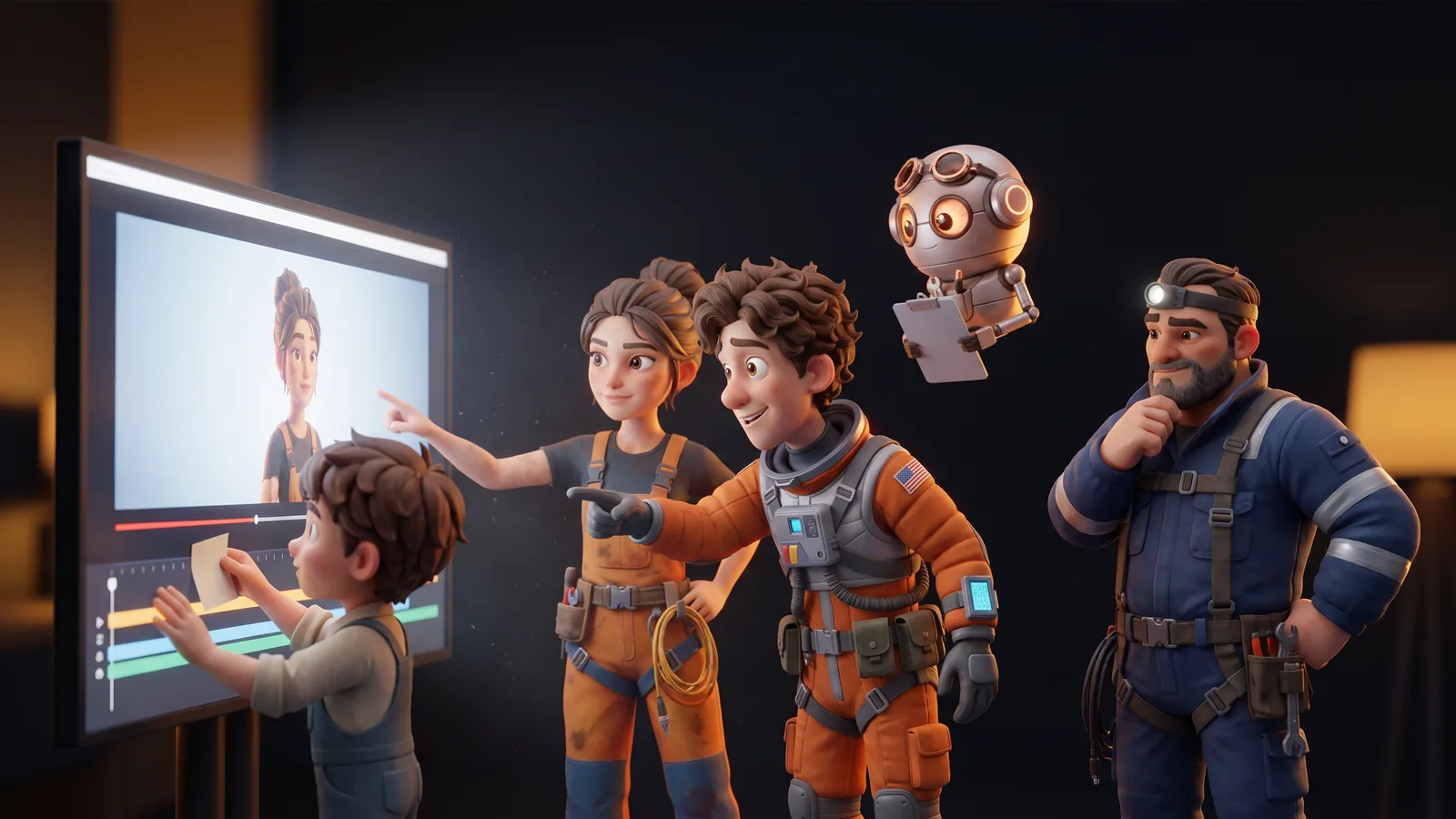
A crew of five reviewing a shot on a large screen together: two point at the frame, a boy sticks a note on the screen, a man nods and a floating robot holds a clipboard.

Teams and reviewers work in different places

Why it hurts. Feedback arrives by email and screenshots; nobody knows which version was approved.

What draft2cut does. Organizations, roles and crew; shared review links with comments per shot; every take kept.

Versions in other languages are slow to produce

Why it hurts. A pitch or a piece for another market means rewriting and redoing the materials.

What draft2cut does. Content is generated in 25 languages and kept alongside the original; subtitles are exported.

Tell us which of these you face

draft2cut is in beta. Request access.

Request beta access